The Escalating Dispute Between UEFA and FIFA over Football Governance
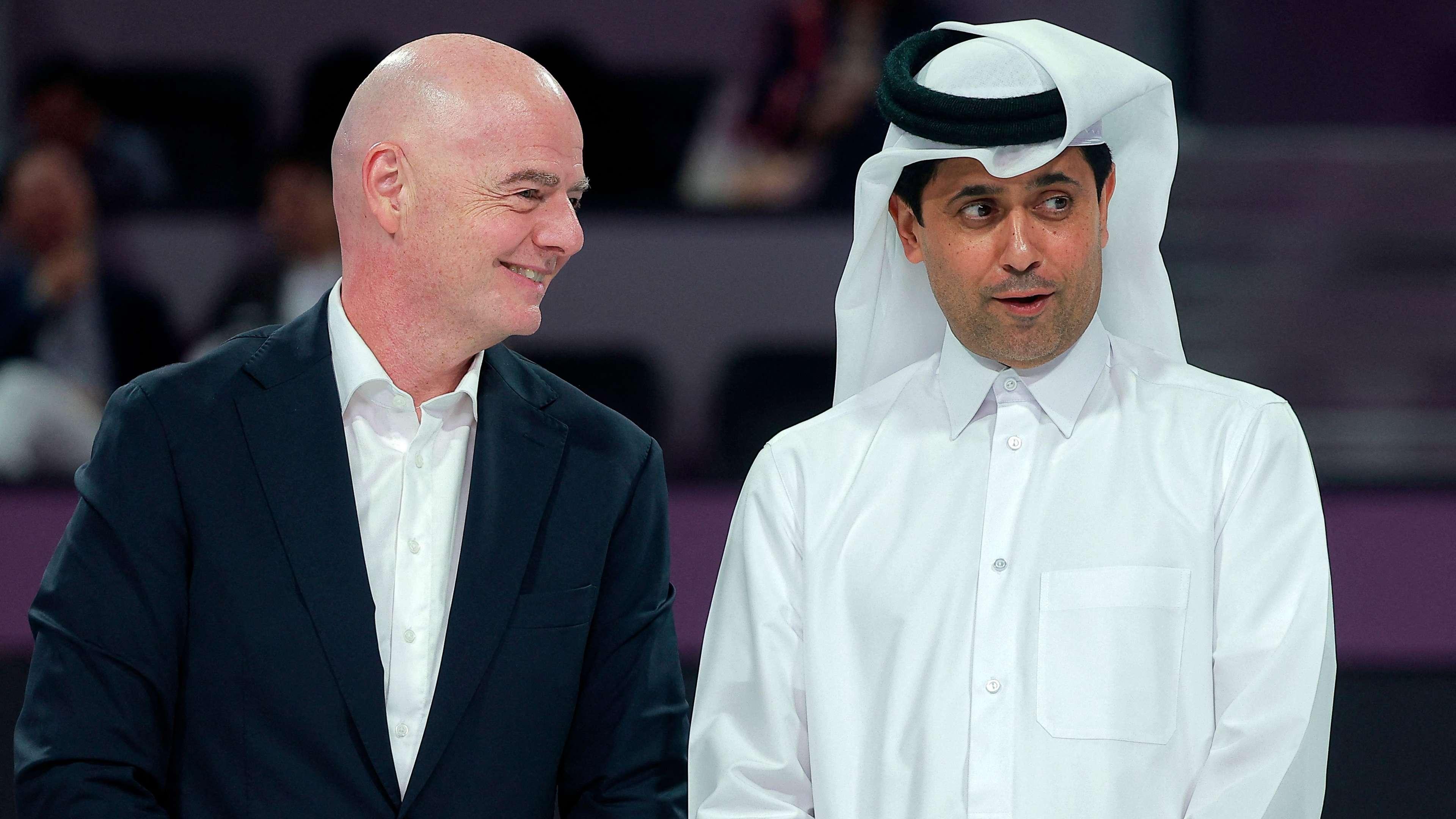
The ongoing conflict between UEFA and FIFA has reached new heights as Paris Saint-Germain president, Nasser Al-Khelaifi, finds himself at the center of a potential challenge to FIFA president Gianni Infantino. The dispute revolves around FIFA’s proposal to establish a commercial company to oversee the World Cup and sell shares to investors, a move that has sparked opposition from European football leaders.
Al-Khelaifi’s Potential Candidacy
Despite Al-Khelaifi’s public statements expressing his disinterest in running for the FIFA presidency, UEFA officials believe he possesses the qualities necessary to challenge Infantino. As the president of Paris Saint-Germain and the European Football Clubs association, Al-Khelaifi holds significant influence in the football world. His successful tenure at PSG, coupled with his strong network of relationships across Asia and media experience as the head of beIN Media Group, make him a formidable candidate in the eyes of some European football officials.
Al-Khelaifi’s Position
A source close to Al-Khelaifi reiterated his lack of ambition for the FIFA presidency, stating, “Nasser has absolutely no ambition, intention or interest in this position at FIFA, and he will continue to support all global and European football institutions quietly.” Despite this, Al-Khelaifi’s profile as a prominent figure in European football makes him a potential contender in the upcoming FIFA presidential elections.
Infantino’s Frontrunner Status
While Al-Khelaifi may be seen as a challenger to Infantino, the current FIFA president remains the favorite to secure another term in the March 2027 elections. Infantino has significantly increased FIFA’s revenues during his tenure, earning him support from various national federations worldwide. His efforts to boost funding for member federations have solidified his position as a respected leader in international football governance.
Potential Challenges for Al-Khelaifi
If Al-Khelaifi decides to enter the race for the FIFA presidency, he would likely garner support from European federations. However, winning the election would require convincing a majority of the 211 member federations globally. Additionally, his candidacy could lead to a lengthy and contentious electoral campaign, potentially reopening past controversies surrounding the candidates.
As the feud between UEFA and FIFA intensifies, the prospect of a competitive FIFA presidential election in 2027 looms large. Whether Al-Khelaifi ultimately decides to challenge Infantino remains to be seen, but his potential candidacy has certainly captured the attention of the football world.
The Role of Commercialization in Football Governance
One of the key issues at the heart of the UEFA and FIFA dispute is the growing trend of commercialization in football governance. FIFA’s proposal to create a commercial entity to manage the World Cup raises concerns about the increasing influence of business interests in the administration of the sport. While commercial partnerships and sponsorships are vital for funding major tournaments and events, there is a delicate balance that must be maintained to ensure that the integrity and values of football are not compromised for the sake of profit.
The tension between UEFA and FIFA reflects a broader debate within the football community about the role of money in the sport. As clubs and federations seek to maximize revenues and secure lucrative deals, questions arise about the impact of commercial interests on decision-making processes and the overall direction of football governance. Finding a sustainable and ethical approach to managing the financial aspects of the game while upholding its core principles is a complex challenge that requires thoughtful consideration and dialogue among all stakeholders.
The Globalization of Football Leadership
With the possibility of Nasser Al-Khelaifi entering the race for the FIFA presidency, the dynamics of football leadership could undergo a significant shift. Al-Khelaifi’s background as a prominent figure in European football and his connections in Asia highlight the increasingly global nature of football governance. As the sport continues to expand its reach beyond traditional markets, the need for leaders with a diverse and inclusive perspective becomes more apparent.
The potential candidacy of Al-Khelaifi also underscores the importance of fostering greater representation and diversity in football leadership positions. By having candidates from different regions and backgrounds vying for top roles in international football organizations, there is an opportunity to promote inclusivity, innovation, and fresh ideas that can benefit the entire football community. Embracing a more diverse leadership landscape can help address the complex challenges facing the sport and ensure that decisions are made with a holistic understanding of global dynamics.
The Future of Football Governance
As the dispute between UEFA and FIFA unfolds and the possibility of a contested presidential election looms on the horizon, the future of football governance hangs in the balance. The outcome of the upcoming FIFA elections could have far-reaching implications for how the sport is managed, regulated, and developed in the years to come. Whether it is through addressing commercialization, promoting diversity in leadership, or navigating complex geopolitical dynamics, the challenges facing football governance require thoughtful and strategic solutions.
Ultimately, the resolution of the escalating dispute between UEFA and FIFA will shape the path forward for international football governance. By fostering transparency, accountability, and collaboration among all stakeholders, there is an opportunity to strengthen the foundations of the sport and ensure its continued growth and success on a global scale.
By delving into the nuances of commercialization, globalization, and the future of football governance, this expanded content offers a comprehensive perspective on the evolving landscape of international football leadership.