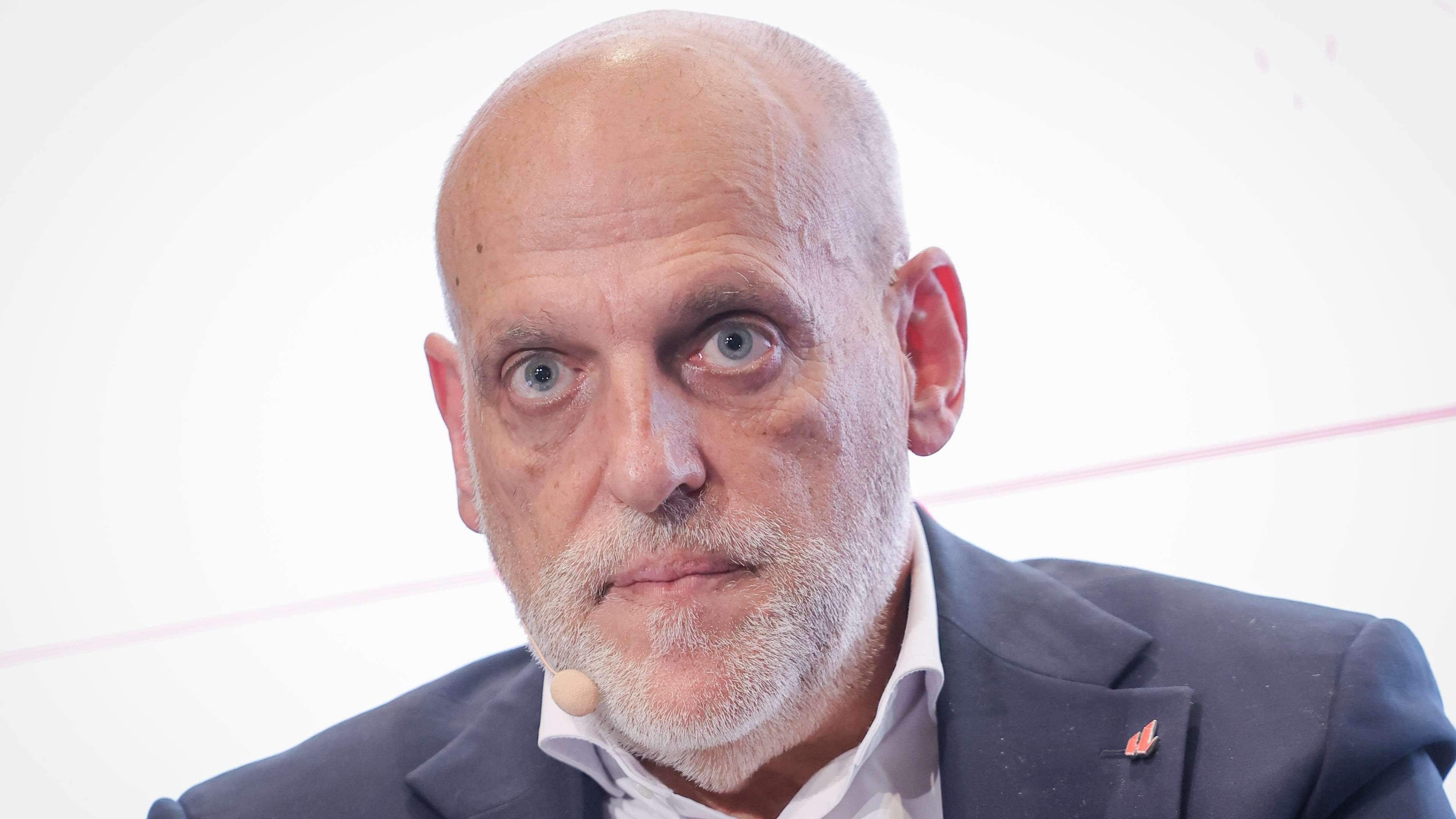
President of La Liga Association Raises Concerns Over FIFA’s World Cup Proposal
The president of Spain’s La Liga association, Javier Tebas, recently expressed his opposition to FIFA’s proposal to increase the number of teams at the 2030 World Cup to 64. Tebas also raised concerns about FIFA President Gianni Infantino’s handling of a disciplinary issue during the 2026 World Cup, suggesting that Infantino’s position was at risk.
Controversy Surrounding the 2026 World Cup
During the 2026 World Cup, a major controversy erupted when FIFA’s disciplinary committee suspended the 12-month ban imposed on United States forward Folarin Balogun. This decision allowed Balogun to play in the last-16 clash against Belgium, despite being sent off in the round-of-32 tie against Bosnia and Herzegovina.
US President Donald Trump intervened in the situation through a phone call with Infantino, leading to FIFA’s disciplinary committee overturning their initial decision and allowing Balogun to participate in the match. However, the United States ultimately lost to Belgium 4-1, bringing an end to their tournament run.
Concerns Raised by Javier Tebas
In an interview with the Italian newspaper La Gazzetta dello Sport, Tebas criticized the decision to suspend Balogun’s punishment, calling it “extremely dangerous.” He suggested that if the United States had won against Belgium, it could have jeopardized Infantino’s position as FIFA President.
Tebas also highlighted an official complaint filed with the International Olympic Committee, accusing Infantino of violating the principle of political neutrality in his dealings with Trump. Despite this complaint, Infantino did not face any sanctions from the IOC.
Opposition to Expanding the World Cup
Additionally, Tebas spoke out against FIFA’s proposal to increase the number of teams at the 2030 World Cup to 64. He argued that expanding the tournament would have negative consequences for domestic football leagues, which rely on the continuity of the game to support thousands of jobs in the industry.
Tebas emphasized the importance of protecting domestic football at all levels and expressed concerns about the impact of increased international matches on the sport. He criticized FIFA’s willingness to study the expansion of the World Cup, stating that it could lead to irresponsible decisions that harm the football industry.
With a potential 64-team format, the World Cup would consist of 16 groups of four teams, eliminating the qualification of third-placed sides and retaining the round of 32. The 2026 edition already featured a record 104 matches, and approval of the expansion would increase that number to 128.
Uncertain Future for FIFA President Gianni Infantino
Tebas concluded by suggesting that Infantino’s time as FIFA President might be coming to an end. While there is no opposing candidate at the moment, Tebas believes that the mounting pressure on Infantino could lead to his departure from the position in the near future.
As debates continue over the future of the World Cup and FIFA’s leadership, the football community awaits further developments on these crucial issues.
The Impact of FIFA’s World Cup Proposal on Football Leagues
Expanding the World Cup to 64 teams could have far-reaching implications for domestic football leagues around the world. With an increased number of international matches and a longer tournament duration, leagues may face scheduling challenges and player fatigue. This could disrupt the regular football calendar, affecting club competitions and potentially leading to conflicts between national teams and clubs over player availability.
Furthermore, the financial impact of an expanded World Cup on domestic leagues cannot be ignored. With more international fixtures drawing attention and revenue away from club competitions, smaller leagues and teams may struggle to compete financially. The redistribution of resources and TV rights could also disproportionately benefit larger leagues and clubs, widening the financial gap within the football industry.
The Role of FIFA President in Global Football Governance
The controversy surrounding FIFA President Gianni Infantino’s handling of disciplinary issues during the 2026 World Cup raises questions about governance and transparency in global football. As the leader of football’s governing body, Infantino is expected to uphold the integrity of the sport and ensure fair play on and off the field.
Infantino’s interactions with political figures like US President Donald Trump highlight the complexities of football diplomacy and the need to maintain independence from external influences. The blurred lines between sport and politics can undermine the credibility of FIFA and raise concerns about the organization’s decision-making processes.
The Future of FIFA’s Leadership and Governance
As Javier Tebas suggests, the pressure on Gianni Infantino and the scrutiny of his actions could signal a turning point for FIFA’s leadership. Calls for accountability and transparency in football governance are growing louder, with stakeholders demanding greater oversight and ethical standards in the sport.
The upcoming FIFA elections will be crucial in determining the future direction of the organization and its leadership. Potential candidates may emerge to challenge Infantino’s position, offering new visions for reform and accountability within FIFA. The outcome of the elections will shape the future of global football governance and determine how the sport navigates challenges and controversies in the years to come.
Conclusion
As the football community grapples with the implications of FIFA’s World Cup proposal and the controversies surrounding its leadership, one thing is clear: the future of the sport is at a crossroads. The decisions made in the coming years will have lasting effects on football leagues, players, fans, and the integrity of the game itself.
It is essential for stakeholders at all levels of the football industry to engage in open dialogues, promote transparency, and prioritize the best interests of the sport. By working together to address challenges and uphold the values of football, we can ensure a sustainable and thriving future for the beautiful game we all love.