Portugal’s João Pinheiro Speaks Out on Controversial World Cup Quarter-Final
Portugal’s referee, João Pinheiro, has finally broken his silence on the controversial World Cup quarter-final match between Argentina and Switzerland. The FIFA Council was left embarrassed after several contentious incidents during the game, with Pinheiro at the center of it all.
The Embolo Dismissal
One of the main talking points of the match was Breel Embolo’s dismissal, which came after a second yellow card was given following a video review. Pinheiro has now shed light on this decision, explaining that his team initially thought that Argentina’s challenge was a bookable offense. However, upon reviewing the footage, they discovered that no foul had occurred, and the opponent had in fact simulated being tripped.
“We saw that there was no foul and that it was play-acting,” Pinheiro stated. “Since it was the second yellow card, the player was sent off. The decision would have been the same even if it was the first yellow card.”
IFAB Acknowledges Mistake
The International Football Association Board (IFAB) has since confirmed that Embolo’s sending off was a mistake. The video review process that led to the second yellow card was carried out incorrectly, leading to the incorrect decision. This pivotal moment in the 72nd minute ultimately changed the course of the match, with Argentina eventually emerging as the winners in extra time.
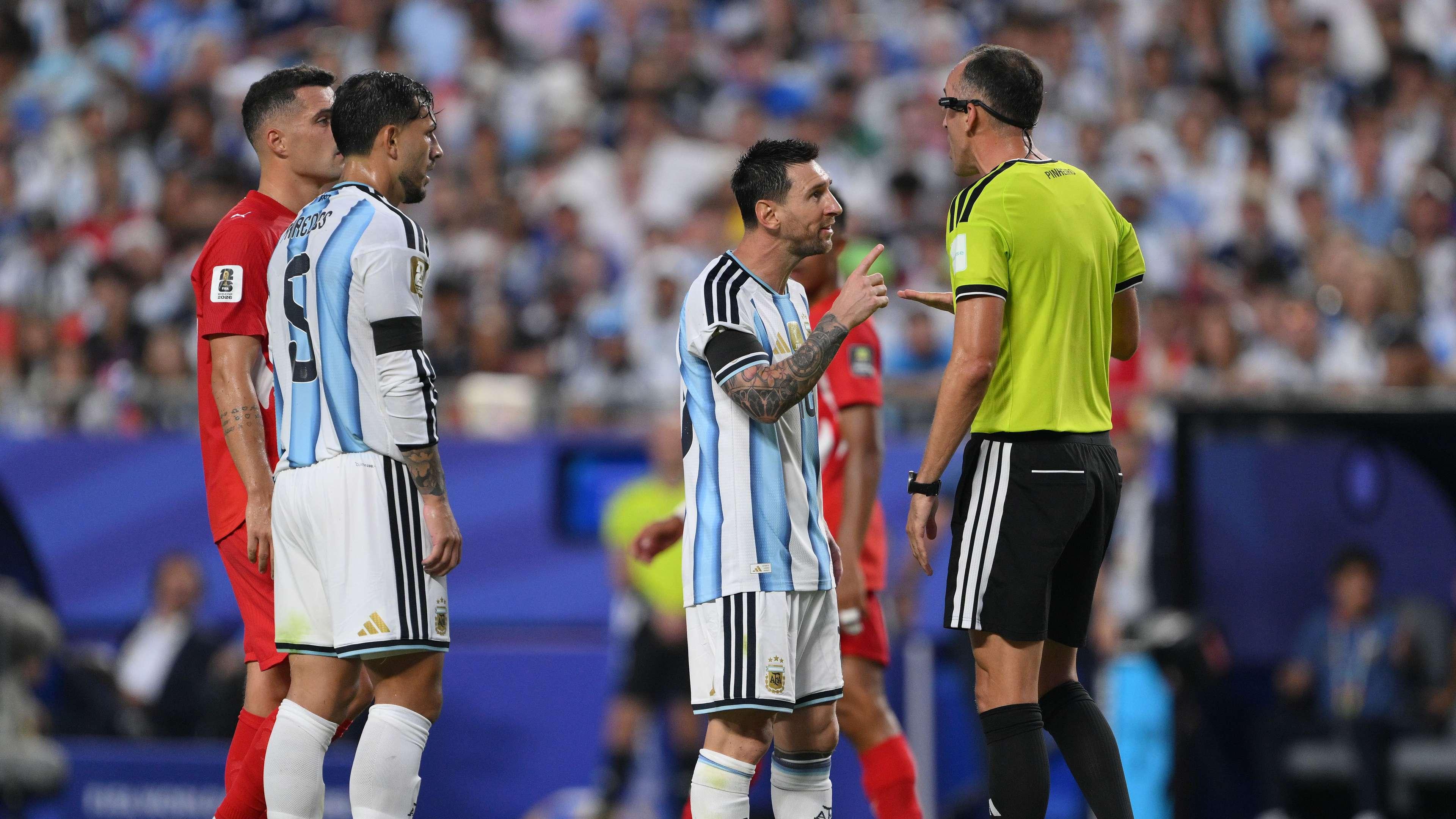
Tense Exchange with Messi
Cameras also captured a heated exchange between Pinheiro and Argentina’s star player, Lionel Messi. The incident saw Messi demanding respect from the referee and accusing him of insulting him. Pinheiro, however, downplayed the confrontation, stating that such interactions are common in football.
“Messi raised some points with me, as did other players. Team captains often communicate with referees, and the new rules allow for this dialogue,” Pinheiro explained.
Managing High-Profile Players
Pinheiro acknowledged that interactions with high-profile players like Messi can draw more attention but emphasized that these dialogues can be constructive in managing games without resorting to issuing cards.
“They are constructive dialogues. We are not obliged to caution everyone. Perhaps he misunderstood something I did, we talked, we understood each other, and then we moved on,” Pinheiro added.
A Memorable World Cup Experience
The 2026 World Cup marked the return of Portuguese officiating to the finals after twelve years, and Pinheiro expressed his gratitude to the Portuguese Football Federation president, Pedro Proença, for his support throughout the tournament.
“There are no words to describe the wonder of the World Cup. One does not realize its greatness until one experiences it,” Pinheiro reflected on his memorable experience at the tournament.
Overall, Pinheiro’s insights shed light on the challenges and responsibilities of officiating high-stakes matches in football, where decisions can have a significant impact on the outcome of games.
Pinheiro’s Approach to Officiating
Pinheiro’s approach to officiating during the World Cup quarter-final highlights the importance of clear communication and adherence to the rules of the game. By explaining the thought process behind key decisions, such as the Embolo dismissal, Pinheiro shows a commitment to transparency and fairness on the field. This level of accountability is essential in maintaining the integrity of football matches, especially at the highest level of competition like the World Cup.
Video Review Challenges
The incident involving the incorrect video review process leading to Embolo’s dismissal raises concerns about the challenges associated with implementing technology in football. While video assistant referees (VAR) aim to minimize errors, cases like this highlight the need for continued refinement and training to ensure consistent and accurate decision-making. Pinheiro’s handling of the situation underscores the complexities of integrating technology into the game and the ongoing efforts to improve its effectiveness.
Impact on Team Dynamics
The tense exchange between Pinheiro and Messi offers a glimpse into the dynamics between referees and players during high-pressure matches. Managing the emotions and expectations of top athletes like Messi requires diplomatic skills and a deep understanding of the game. Pinheiro’s ability to navigate such interactions demonstrates the importance of maintaining professionalism and composure in the face of intense scrutiny and pressure.
Future of Officiating
As football continues to evolve, the role of referees in the game is constantly evolving as well. Pinheiro’s experience at the World Cup serves as a testament to the dedication and expertise required to officiate at the highest level. By sharing his insights and reflections, Pinheiro contributes to the ongoing dialogue about the future of officiating in football and the importance of continuous improvement and adaptation to meet the demands of the modern game.
Legacy of the 2026 World Cup
The 2026 World Cup will be remembered not only for the thrilling matches on the field but also for the controversies and discussions surrounding refereeing decisions. Pinheiro’s involvement in this historic tournament adds to the legacy of the event and underscores the pivotal role that officials play in shaping the outcome of games. As football fans reflect on the tournament, the lessons learned from incidents like the Argentina-Switzerland quarter-final will inform future discussions and developments in the sport.
In conclusion, João Pinheiro’s account of the controversial World Cup quarter-final provides valuable insights into the intricacies of refereeing in football. His experiences offer a glimpse into the challenges, responsibilities, and rewards of officiating at the highest level, contributing to a deeper understanding of the game and its evolving landscape.