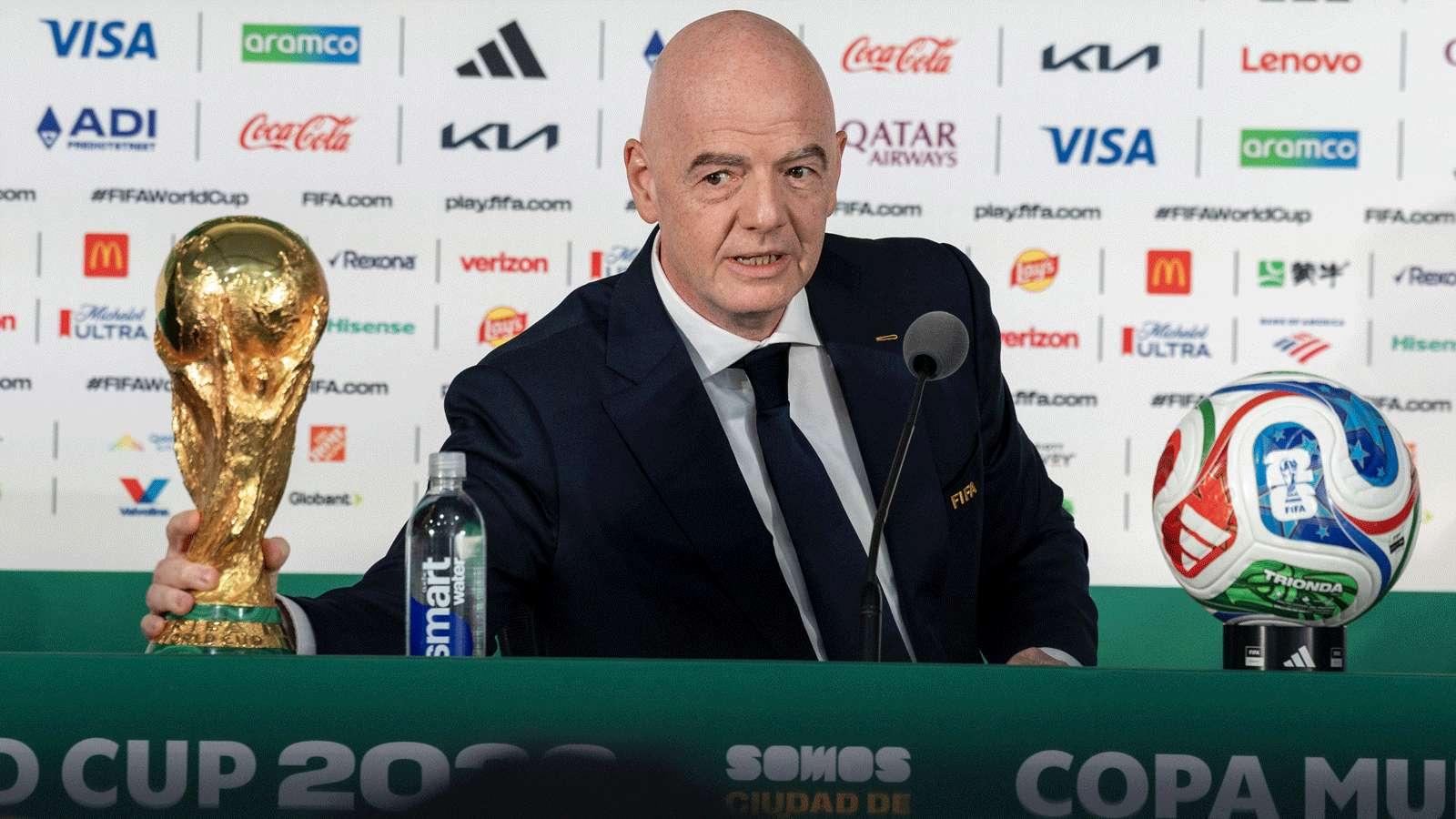
FIFA President Offers Financial Incentive to Federations for World Cup Stakes
In a bold move to push through his controversial plan to sell stakes in the World Cup, FIFA President Gianni Infantino has presented member federations with a massive financial incentive. The 211 associations have until September 19 to accept the proposal, which has already faced severe backlash from major European governing bodies.
Financial Incentive Offered by FIFA President
Gianni Infantino, the president of FIFA, has offered member federations a significant financial incentive to approve his plan to sell stakes in the World Cup. This move has caused a stir in the world of football, with many expressing concerns about the potential implications of such a decision.
The proposal, which has been met with resistance from some major European governing bodies, has set a strict deadline of September 19 for federations to accept. Infantino’s plan aims to generate revenue for FIFA by selling stakes in the prestigious tournament, a move that has divided opinions within the football community.
Controversy Surrounding the Proposal
The plan put forward by Infantino has sparked controversy and raised questions about the future direction of international football. Critics argue that selling stakes in the World Cup could have far-reaching consequences for the sport, potentially compromising its integrity and tradition.
Major European governing bodies have expressed strong opposition to the proposal, citing concerns about the commercialization of the World Cup and the potential impact on the competitive balance of the tournament. However, Infantino remains steadfast in his belief that the plan will benefit FIFA and its member federations.
Deadline Looms for Member Federations
With the September 19 deadline fast approaching, member federations are under pressure to make a decision on Infantino’s proposal. The financial incentive offered by the FIFA president has added an extra layer of complexity to the debate, as federations weigh up the potential benefits and drawbacks of selling stakes in the World Cup.
While some federations may see the financial incentive as a compelling reason to approve the plan, others remain cautious about the long-term implications of such a decision. The deadline for acceptance is fast approaching, and federations face a difficult choice between financial gain and potential risks to the integrity of the World Cup.
Conclusion
The controversy surrounding Gianni Infantino’s proposal to sell stakes in the World Cup continues to divide the football community. With a strict deadline looming, member federations are under pressure to make a decision on the plan, which has already faced significant opposition from major European governing bodies.
As the debate rages on, the future of international football hangs in the balance. Will federations accept Infantino’s financial incentive and approve the sale of stakes in the World Cup, or will concerns about the commercialization of the tournament prevail? Only time will tell.
Financial Implications of Selling World Cup Stakes
One of the key concerns raised by critics of Infantino’s proposal is the potential financial implications of selling stakes in the World Cup. While the financial incentive offered to member federations may seem tempting at first glance, there are fears that this move could have long-term consequences for the sport.
By commercializing the World Cup through the sale of stakes, there is a risk that the tournament could become more about profit than the spirit of competition. Some argue that this could lead to increased ticket prices, commercial partnerships overshadowing the game itself, and a shift in focus from the sport to financial gains.
Furthermore, there are questions about how the revenue generated from selling World Cup stakes would be distributed. Would it primarily benefit FIFA and its top officials, or would it trickle down to support grassroots football development, especially in underprivileged regions? These are crucial considerations that member federations must weigh before making a decision.
Impact on Competitive Balance
Another aspect that has sparked debate is the potential impact on the competitive balance of the World Cup. Major European governing bodies, in particular, have expressed concerns that selling stakes in the tournament could favor wealthier nations and clubs, further widening the gap between the footballing elite and smaller nations.
There are fears that a commercialized World Cup could lead to a scenario where only the richest federations have the resources to compete at the highest level, while smaller nations struggle to keep up. This could ultimately diminish the diversity and unpredictability that make the tournament so captivating for fans worldwide.
Infantino’s plan has opened up a dialogue about how to maintain the integrity of the World Cup while exploring new revenue streams. Finding a balance between financial sustainability and preserving the essence of the sport will be crucial in determining the future direction of international football.
Member Federations at a Crossroads
As the deadline for accepting Infantino’s proposal approaches, member federations find themselves at a crossroads. The decision they make will not only impact the future of the World Cup but also shape the landscape of international football for years to come.
On one hand, the financial incentive offered by the FIFA president presents an opportunity for federations to boost their coffers and invest in various football development programs. However, this comes with the potential risk of compromising the values and traditions that have made the World Cup a global phenomenon.
Member federations must carefully consider the implications of their decision, weighing short-term financial gains against long-term consequences. The choice they make will have far-reaching effects on the sport, influencing how future generations experience the magic of the World Cup.
Looking Ahead
As the football world awaits the outcome of the federation’s decisions, all eyes are on the September 19 deadline. The controversy surrounding Infantino’s proposal has ignited passionate debates and raised fundamental questions about the future of international football.
Whether the financial incentive proves to be a game-changer or a stumbling block remains to be seen. What is clear is that the football community is at a pivotal moment, where the values of the sport clash with the allure of financial gains. Only time will reveal the path that member federations choose to take and the impact it will have on the beautiful game.