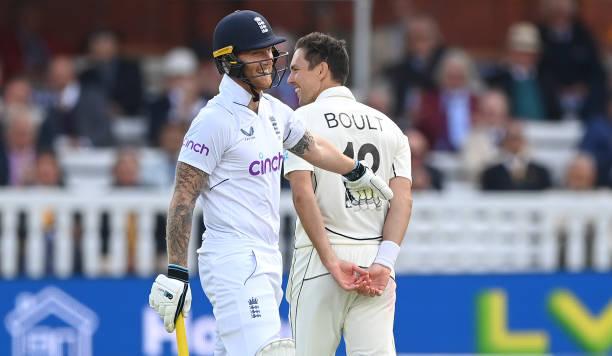
Crossing gives an entering player a little more time to get up to speed, which can be essential in close games of limited-overs cricket.
The new ICC rule takes effect on October 1, though the Hundred competition in England has previously implemented such a change.
“When a batter is out caught, the new batter will come in at the end the striker was, regardless of whether the batters crossed prior to the catch being taken,” the ICC said.
The use of saliva to clean the ball has also been permanently prohibited by the regulating body. It had temporarily prohibited the practise in order to stop the spread of COVID-19.
It had also tightened up on slow over rates in one-day internationals in response to recommendations from the Marylebone Cricket Club (MCC), the game’s governing body.
Teams who fail to bowl their full quota inside the time limit, as in Twenty20 Internationals, will be required to bring an additional player inside the 30-yard circle for the balance of the innings.
This rule will take effect once the men’s World Cup Super League concludes in 2023.
When a batter is caught, the new batter will come in at the end where the striker was, regardless of whether the batters crossed previous to the catch being taken.
Previously, if the batters crossed before a catch was made, the next ball would be struck by the non-striker while the new batter was at the non-end. striker’s
Use of saliva to polish the ball: This prohibition has been in place in international cricket for almost two years as a Covid-related interim remedy, and it is deemed suitable for the ban to be made permanent.
Incoming batter ready to face the ball: In Tests and ODIs, an incoming hitter must now be ready to take a strike within two minutes, but the current T20I requirement of 90 seconds remains unaltered.
In ODIs and Tests, the entering batter had three minutes to take strike, but this has recently been lowered to two minutes. If this is not done, the fielding captain may request a timeout.
Striker’s right to play the ball: This is limited such that some portion of their bat or person must remain on the pitch. If they go any further, the umpire will call and signal Dead ball. Any ball that forces the batter to leave the pitch is sometimes referred to as a No ball.
Finn Allen Denies He Is In Competition To Take Guptill’s Place As The Latter Turns 36 In The Next WC
Unfair movement by the fielding side: Any unfair and deliberate movement by the fielding side when the bowler is running in to bowl may now result in the umpire awarding the batting side five penalty runs in addition to a call of Dead ball.
Running out the non-striker: The Playing Conditions follow the Laws by relocating this way of achieving a Run out from the ‘Unfair Play’ section to the ‘Run out’ section.
Running out a non-striker for backing up too much, which was previously considered unfair play, will now be regarded a standard run-out.
Previously, a bowler who noticed the batter approaching down the wicket before commencing their delivery stride might toss the ball to attempt to run out the striker. This is now known as a Dead ball practise.