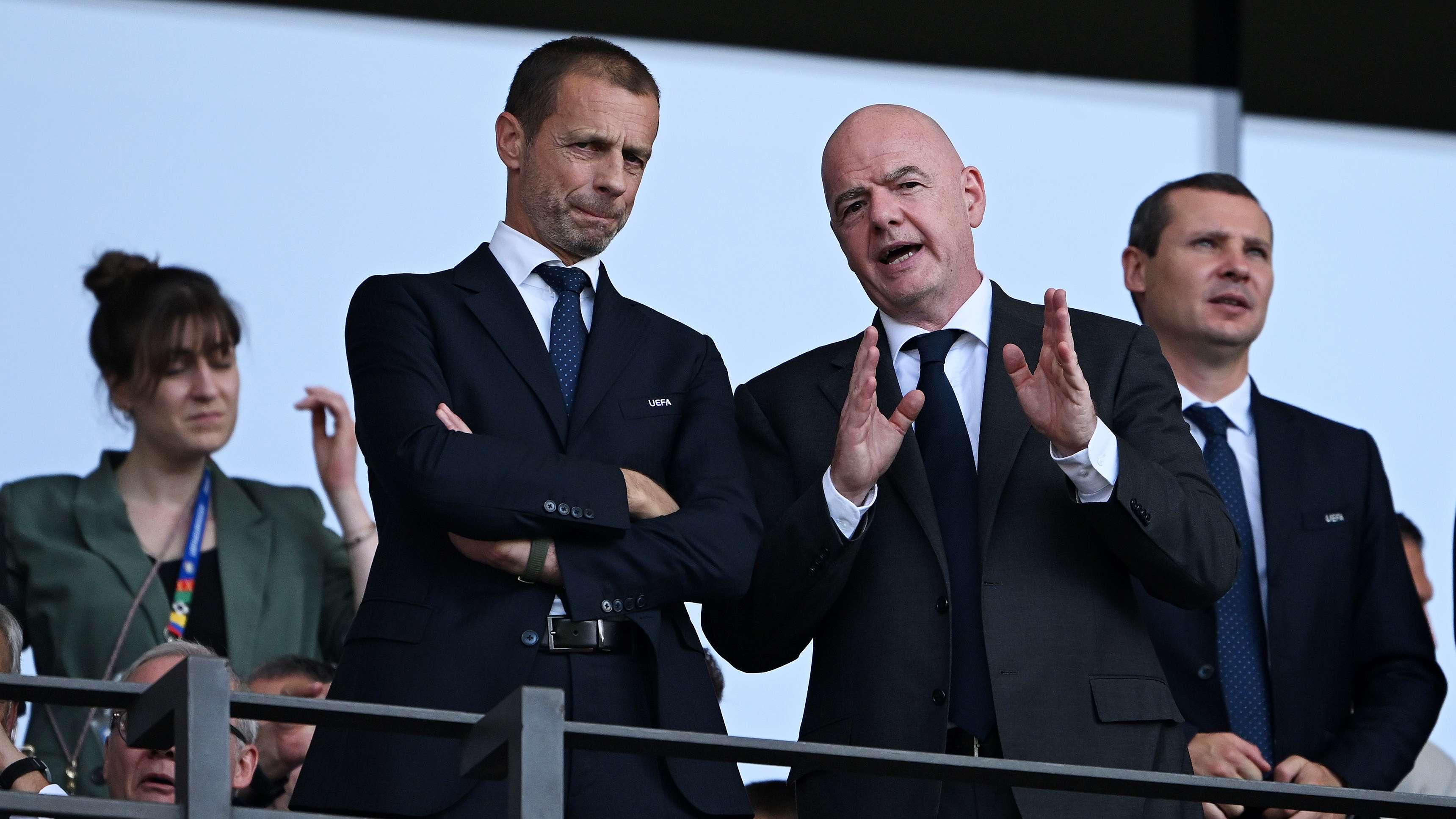
Major Crisis Erupts in World Football Over Proposed World Cup Sale
A major crisis has unfolded within the world of football following reports that FIFA President Gianni Infantino is considering selling shares of the World Cup to private-sector investors. This controversial move has sparked a heated dispute between FIFA and its European counterpart, UEFA, with UEFA President Aleksander Ceferin strongly opposing the proposal.
UEFA’s Strong Opposition
According to a report by “The Times” newspaper, Infantino’s plan to sell stakes in the World Cup has been met with fierce resistance from UEFA. In a statement issued by UEFA, Ceferin stated that the proposal “crosses a line that football’s governing bodies should never cross.” The European football governing body emphasized that football and its governance should not be treated as a commodity to be bought and sold, especially without transparency about the beneficiaries.
The urgency of the situation was highlighted in the statement released by UEFA, urging all parties involved in football, including national football associations, leagues, clubs, players, fans, and governments, to take a stand against the proposed sale. The essence of football, as UEFA emphasized, should not be compromised for financial gain.
Details of the Proposed Sale
Reports suggest that Infantino is exploring the possibility of selling shares of the World Cup through a new company, with preliminary agreements rumored to be valued at over 17 billion euros. While FIFA would retain the majority stake, private-sector investors could acquire minority stakes worth billions of euros.
JP Morgan is reportedly overseeing the process, with even former U.S. President Donald Trump being consulted on the matter. The potential sale would involve all 211 FIFA member associations, expanding the World Cup to include more than 48 teams and potentially increasing the frequency of the tournament beyond once every four years.
Potential Ramifications
The proposed sale of World Cup shares to private investors has raised significant concerns within the football community. Critics fear that the commercialization of the world’s most prestigious football competition could compromise the integrity of the sport and prioritize financial interests over the spirit of competition.
As the dispute between FIFA and UEFA intensifies, the future of the World Cup and the governance of football remain uncertain. The outcome of this crisis could have far-reaching implications for the sport, its stakeholders, and the millions of fans who hold football close to their hearts.
Stay tuned for further developments as the world of football grapples with this unprecedented challenge to its core values and principles.
Ideological Clash in Football Governance
The clash between FIFA and UEFA over the proposed sale of World Cup shares symbolizes a deeper ideological struggle within the governance of football. At the heart of this conflict lies the tension between treating football as a global cultural phenomenon and viewing it as a commercial product to be exploited for financial gain.
While FIFA argues that selling shares of the World Cup could bring in significant revenue that could benefit the development of football worldwide, UEFA emphasizes the importance of preserving the purity and integrity of the sport. The debate raises fundamental questions about the values that should guide the management of football and whether financial considerations should take precedence over the essence of the game.
Impact on Football’s Grassroots
One of the key concerns surrounding the proposed sale is its potential impact on football’s grassroots, particularly in developing countries. If private investors acquire stakes in the World Cup, there is a risk that the focus will shift towards maximizing profits rather than investing in the growth of football at the grassroots level.
Local clubs, youth academies, and community programs that form the foundation of football in many countries could be marginalized in favor of commercial interests. This could exacerbate existing inequalities within the sport and hinder the ability of aspiring young players to access opportunities for development and advancement.
Transparency and Accountability
Another aspect of the debate revolves around the need for transparency and accountability in football governance. Critics of the proposed sale argue that the lack of clarity regarding the beneficiaries of the deal raises concerns about potential conflicts of interest and the motives driving the decision-making process.
Ensuring transparency in the management of football is essential to maintaining public trust and upholding the principles of fairness and equity in the sport. Without transparency about how the proceeds from the sale will be used and who will ultimately benefit, doubts about the integrity of football’s governing bodies may persist.
Looking Ahead
As the dispute between FIFA and UEFA continues to unfold, the future of the World Cup and the broader landscape of football governance hang in the balance. The outcome of this crisis will not only shape the trajectory of the sport at the highest levels but also reverberate throughout all levels of football, from elite competitions to local grassroots initiatives.
Ultimately, the resolution of this conflict will require a delicate balance between the financial imperatives facing football’s governing bodies and the preservation of the values that underpin the sport. Finding a path forward that upholds the integrity of football while also addressing the financial challenges it faces will be crucial in charting a sustainable and equitable future for the beautiful game.
As stakeholders in football grapple with the complexities of this unprecedented challenge, the global football community watches closely, awaiting a resolution that will shape the future of the sport for generations to come.